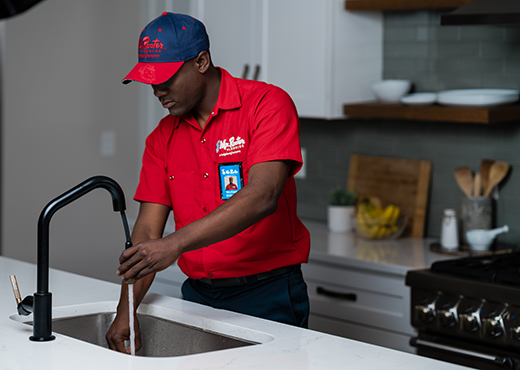
Your plumbing system does more than deliver water to your faucets and carry waste away. It protects your home's foundation, prevents water damage, keeps your family healthy, and ensures daily life runs without disruption. When something goes wrong (a burst pipe on a freezing January morning, a backed-up sewer line flooding your basement, or a water heater that stops producing hot water), you need a plumber you can count on every time.
Your Mr. Rooter Plumbing of Pittsburgh team understands what's at stake. We know that Pittsburgh's aging infrastructure means many homes still have galvanized steel or even lead service lines that can corrode, restrict water flow, or contaminate your water supply. We know that the city's freeze-thaw cycles put stress on pipes, especially those that aren't properly insulated. And we know that hard water causes sediment buildup in water heaters, clogs fixtures, and reduces the lifespan of appliances.
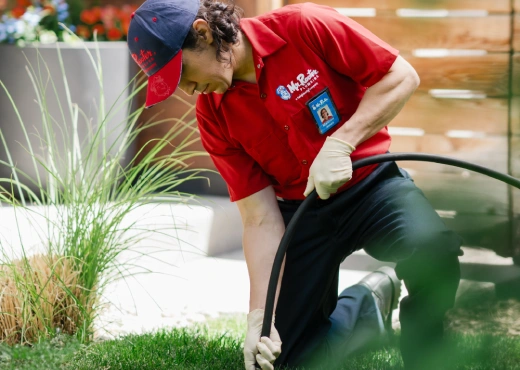
You get certified plumbers who don't just show up with a wrench and a guess. You get licensed professionals with the right training and the right equipment to handle your specific plumbing challenge, whether that's a camera inspection of your sewer line, HydroScrub® jetting to clear years of buildup, or a full water heater replacement with options for tankless water heater systems.
Contact us now to schedule service, or request an estimate online.
Expert Plumbing for Pittsburgh's Unique Challenges
Pittsburgh isn't like other cities. Homes here have character, history, and plumbing systems that reflect decades of use, repairs, and sometimes, deferred maintenance. If you live in a home built before the early 2000s, there's a good chance your plumbing includes materials that are reaching the end of their lifespan. Galvanized steel pipes corrode from the inside, cast iron sewer lines become vulnerable to root intrusion, and lead service lines pose health risks.
These aren't just minor inconveniences. Corroded pipes reduce water pressure, increase the risk of leaks, and can contaminate your water. Tree roots grow into even the smallest cracks in sewer lines, causing slow drains, foul odors, and eventually, complete blockages that require costly repairs. And when winter temperatures drop below freezing, uninsulated pipes in attics, crawl spaces, or exterior walls are at serious risk of freezing and bursting, turning a manageable problem into an expensive emergency.
You need a plumber who understands these issues before they walk through your door. That's what your locally owned and operated Mr. Rooter Plumbing of Pittsburgh delivers. We assess your home's specific conditions, explain what's happening and why, and give you options that make sense for your budget and your long-term peace of mind. You don't get a one-size-fits-all solution. You get a plan that fits your home.
What to Know About Plumbing Materials in Pittsburgh's Older Homes
Galvanized steel pipes were common in Pittsburgh homes built between the 1930s and the 1980s. They have a lifespan of about 40 to 70 years, depending on your water chemistry. When they fail, they fail from the inside out. Corrosion builds up and narrows the pipe diameter, so you lose pressure gradually. If your home is 50 years old or older and you've never replaced the supply lines, you're likely running on borrowed time.
Cast iron sewer lines can last 75 to 100 years, but Pittsburgh's freeze-thaw cycles and the acidic nature of wastewater accelerate deterioration. When we camera a cast iron lateral, we look for rust scale buildup, channeling at the bottom of the pipe, and hairline cracks that let roots in. If the pipe is pitted and rough, it's catching toilet paper and grease, and that's why you're snaking it every six months.
If your water service line is copper and it's from the 1960s or earlier, the joints were likely soldered with lead-based solder. That's not the same as a lead pipe, but it can still leach lead into your water, especially if you have acidic or soft water that dissolves the solder over time. Pittsburgh Water notes there is no safe level of lead in drinking water, so confirming your service line material is important, especially if you have young children.
How We Diagnose Common Pittsburgh Plumbing Problems
When we arrive for a slow drain call, we ask whether it's been getting worse over weeks or happened suddenly, whether you hear gurgling from other fixtures, and whether you've noticed sewer smells. Those answers tell us whether we're dealing with a venting issue, a partial blockage, or a main line problem. If you call us about low water pressure and it's only at one fixture, we check the aerator and the shut-off valve first. If it's whole-house and gradual, we're thinking about galvanized pipe corrosion, and we'll want to see what's happening inside your walls before we quote a solution.
When we perform a camera inspection on a sewer lateral in Shadyside or Squirrel Hill, we're looking for three things that tell us whether you need a repair or a full replacement: the percentage of the pipe that's compromised, whether tree roots have created a gap that will keep growing, and whether the belly or sag is holding standing water between flushes. We mark the distance from the cleanout where we see issues, provide a written report with screenshots you can keep for your records, and explain your options in plain language. That way, if you decide to wait on a repair, you have documentation for the next plumber or for resale disclosure.
Neighborhood-Specific Plumbing Challenges We See Across Greater Pittsburgh
If you live in the South Hills or Mount Lebanon, your sewer lateral likely has a longer run to the street and may pass under mature trees. That makes root intrusion extremely common, and it's why we often recommend a camera inspection even if you're not having backups yet. Many homes in Lawrenceville and the North Side were built in the early 1900s and still have clay tile sewer laterals. Clay is brittle and cracks easily during ground movement, so if you're seeing recurring slow drains or sewage odors, a camera inspection can confirm whether the lateral has separated at the joints.
If you're in one of Pittsburgh's historic districts (like the Mexican War Streets or parts of Highland Park), you may have plumbing that's been patched and modified over a century of renovations. We've worked in these neighborhoods long enough to know what to expect: lead drains that were never replaced, cast iron stacks that are paper-thin at the cleanout, and supply lines that were routed through additions and don't follow modern code. When we come out, we don't just look at the immediate problem. We assess the system so you know what else might need attention.
Why Catching Problems Early Matters in Older Homes
A small drip under a slab or behind drywall doesn't stay small. The water migrates along floor joists, saturates insulation, and creates conditions for mold growth you won't see until the damage is structural. By the time you notice a musty smell or a soft spot in the floor, you're often looking at subfloor replacement and remediation costs that dwarf the original pipe repair.
When a sewer lateral has a root intrusion, and you keep using drain cleaner to push it through, you're training yourself to live with a failing system. The roots grow back faster each time, and eventually, you'll have a complete blockage on a Friday night when no one can get a camera crew out until Monday. We see this pattern all the time, and the homeowners who call us early save thousands compared to those who wait for the catastrophic failure.
A burst pipe doesn't just flood a room. In the time it takes you to locate your main shut-off valve, a half-inch split can release 5 to 10 gallons per minute. That's 300 gallons in an hour if you're not home. The water damage, the emergency mitigation, and the ruined belongings add up fast, and most homeowner policies have a deductible that makes the initial repair bill feel small by comparison.
Master Plumbers and Licensed Professionals You Can Trust
Every plumber on your Mr. Rooter Plumbing of Pittsburgh team is fully licensed and insured to work in Allegheny County. That means they've completed 576 hours of classroom instruction at an accredited school and four years of employment with a registered master plumber before applying to take the journeyman exam through the Allegheny County Health Department. Journeymen who pursue master plumber licensing complete two full years of experience as a journeyman before applying for the master exam. And every plumber undergoes background checks, so you can feel confident about who's working in your home.
This isn't just a regulatory checkbox. Licensing ensures that your plumber understands local requirements, proper installation techniques, and safety protocols. You're not hiring someone who learned plumbing from videos. You're hiring a trained professional who knows how to diagnose complex issues, install systems correctly, and protect your home from future problems.
What to Expect When You Call Us
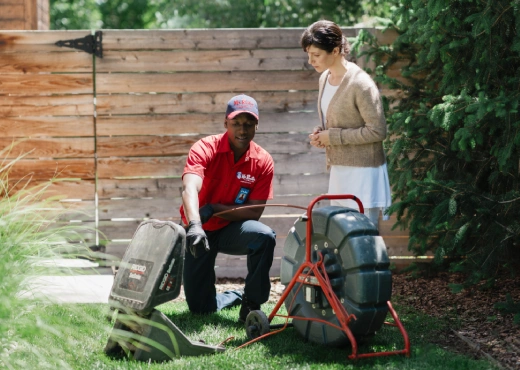
When you call us about a sewer backup, here's what happens: We'll ask you a few questions over the phone to help us arrive prepared (where the backup is, whether it's affecting multiple fixtures, and whether it happens during rain). When we arrive, we'll locate your main cleanout and run a camera through the line to see exactly what's causing the blockage. You'll watch the video feed with us so you can see whether it's roots, a collapsed section, or just buildup. Then we'll explain your options, usually a cable cleaning if it's a soft blockage or HydroScrub® Jetting if it's roots or hardened scale, and give you the price before we start. The whole diagnostic takes about 30 minutes, and the clearing can take anywhere from 30 minutes to two hours, depending on what we find.
If we're replacing a section of your sewer lateral, we'll walk you through whether we can use trenchless sewer line repair or whether we need to excavate. If we have to dig, we'll show you on a property map exactly where the lateral runs, coordinate locations through PA one call, protect your landscaping with plywood runways, and make sure we restore your yard or driveway to match the surrounding area when we're done.
How Mr. Rooter Plumbing Works Differently
We don't upsell. If you call us about a slow drain and it's a simple hair clog, we'll clear it, check the trap, and move on. We're not going to pitch you a whole-house repipe when all you need is a clogged drain cleaning. But if we see something that's going to become a problem in the next year or two, we'll tell you so you can plan for it.
If we're working on your sewer lateral and we find an issue with the city connection or discover that the wye has failed, we don't just hand you a phone number. We'll coordinate with Pittsburgh Water, schedule the inspection, and make sure the city portion is addressed before we complete your private lateral work. We also protect your time. If we're going to be more than 15 minutes late to a scheduled appointment, we call. If the repair is going to take longer than we estimated, we let you know before we go past the original time window. That's the kind of customer service you should expect from professional plumbers.
24/7 Emergency Plumbing Services When You Need Help
Plumbing emergencies don't wait for business hours. A pipe bursts at 2 a.m. A sewer line backs up into your basement on a Saturday afternoon. Your water heater leaks across the laundry room on a holiday morning. When these things happen, you need a plumber who answers the phone, shows up ready to diagnose the issue, and explains your options clearly.
Your Mr. Rooter Plumbing of Pittsburgh team is available 24 hours a day, 7 days a week, 365 days a year. You call, you reach a real person. You get upfront pricing even in an emergency, so you know what the repair will cost before work begins.
Upfront Pricing and the Neighborly Done Right Promise®
You deserve to know what you're paying before any tools come out. That's why we use upfront, flat-rate pricing on every job. Your plumber assesses the issue, explains what needs to be done, and provides a clear price. You approve it, and then we get to work. No hourly charges that escalate and no hidden fees.
Your final cost reflects what we find on-site and what your specific property needs, which is why we provide the price after the diagnostic. Things like pipe depth, access challenges, permit requirements, and material choices all factor into the scope, and we'll explain each one so you understand what you're paying for. Every repair, installation, and service we complete is backed by the Neighborly Done Right Promise®. If we did not deliver the workmanship we guaranteed, we will return to make it right. Simply contact your local Mr. Rooter Plumbing within 14 days, and we'll be back.
Protecting Your Home During Every Visit
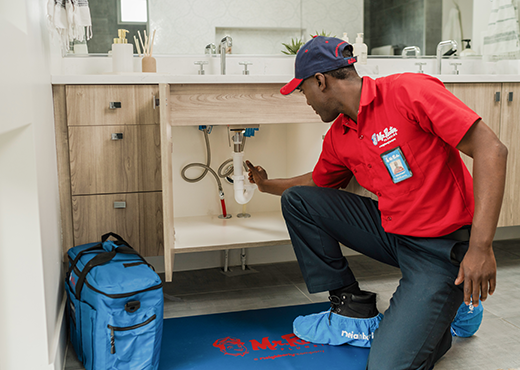
Your home isn't a construction site, and we don't treat it like one. Every plumber on our team wears shoe covers, uses protective mats, and takes care to keep your floors and work area clean. After the job is finished, we clean up so you're left with a fixed plumbing system, not a mess.
Financing Options for Larger Plumbing Projects
Some plumbing repairs can't wait, but the cost can still feel overwhelming, especially for larger projects like sewer line replacement, whole-house repiping, or water heater installation. That's why we offer financing options to help you move forward with the plumbing work your home needs while keeping your budget in mind. Call us today to get started!
Significant Warning Signs You Need a Plumber in Pittsburgh
Homeowners often ask us how to know when a plumbing issue needs professional attention. Here are the red flags we see most often in Pittsburgh homes. If you notice any of these, it's time to call a licensed plumber before the problem gets worse.
- Water pressure has dropped noticeably over the past year (usually due to galvanized pipe corrosion).
- Drains that gurgle when flushing a toilet or running the washing machine (venting issue or partial main line blockage).
- A water heater older than 10 years that is making popping, rumbling, or hissing noises (sediment buildup or tank failure coming).
- A wet spot in the yard that doesn't dry out, even when it hasn't rained (pipe leak detection needed).
- A sewage smell in the basement, crawl space, or yard (cracked sewer lateral or failed wax ring).
- Water stains on the ceiling under a bathroom (leaking supply line, drain leak, or failed toilet seal).
- A sump pump that runs constantly or doesn't run at all (float switch failure or overwhelmed drainage system).
- Rust-colored water from the hot water taps (water heater tank corrosion).
- Toilets that run constantly or refill on their own (failed flapper valve or fill valve, wasting hundreds of gallons).
- Leaky faucets that drip constantly (worn washers or valve seats that waste water and increase your bill).
Plumbing Maintenance and Leak Detection Services
Regular plumbing maintenance can prevent costly emergency repairs and extend the life of your plumbing system. Our team offers comprehensive plumbing maintenance programs that include annual inspections, drain cleaning, water heater flushing, and leak detection services. We use advanced tools such as thermal imaging and acoustic listening devices to detect hidden leaks in walls, under slabs, and in underground lines before they cause major damage.
If you're hearing water running when nothing is on, seeing unexplained spikes in your water bill, or noticing damp spots you can't explain, we can perform a full leak detection inspection. We'll identify the source, explain your repair options, and handle the fix so you can stop wasting water and money. Many Pittsburgh homeowners schedule annual plumbing maintenance in the spring or fall to catch small issues before they turn into emergencies.
Pittsburgh Plumbing Solutions Built for the Steel City
Pittsburgh's winters are tough on plumbing. Freeze-thaw cycles weaken pipes over time, and when temperatures stay below freezing, exposed pipes in attics, crawl spaces, and exterior walls are at serious risk. Frozen pipes can burst without warning, flooding your home quickly. You need a plumber who knows how to winterize your system by insulating vulnerable pipes, addressing drafts, and protecting outdoor faucets before the first hard freeze.
After a hard Pittsburgh winter, we see a spike in slab leaks and foundation cracks that let groundwater in. If you notice your sump pump running more than usual after the snow melts, or if you see water pooling in your basement even when it's not raining, that's often a sign that freeze-thaw movement has shifted your foundation or cracked a drain tile. Early spring is the time to inspect sump pumps, test backflow valves, and check for new cracks. We offer backflow testing to ensure your system is protecting your drinking water from contamination.
Hard water is another issue Pittsburgh homeowners deal with year-round. Minerals build up inside your water heater, reducing efficiency and shortening its lifespan. When your water heater is working overtime during Pittsburgh summers (morning showers, dishwashers, washing machines running constantly), it's putting stress on an aging tank. If your water heater is 10 years old or older and you're hearing popping or rumbling noises, that sediment buildup at the bottom gets superheated and breaking loose. That sediment reduces efficiency and accelerates tank corrosion. Summer is actually a great time to flush your water heater because the incoming water is warmer, allowing the system to recover faster.
Before the first freeze, we recommend having a plumber inspect your outdoor hose bibs and check that your interior shut-off valves are working. A stuck valve in November means you can't isolate that line, and if it freezes, you're dealing with an interior flood. We also check sump pump float switches in the fall because a dead pump during a November rain event can flood a basement before you even know the power is off.
And if your home is older, there is a chance you still have lead or galvanized service line material. Pittsburgh Water notes there is no safe level of lead in drinking water, and they maintain a public lead map to help residents understand what is known about service line material. If you're concerned about lead exposure, we can inspect accessible piping, recommend next steps, and install point-of-use filtration where appropriate.
Schedule now for a plumbing inspection and get the peace of mind that comes from knowing your system is safe, efficient, and ready for Pittsburgh's seasons.
Commercial Plumbing Services for Pittsburgh Businesses
We also provide commercial plumbing services for businesses throughout Pittsburgh and the surrounding areas. Whether you operate a restaurant, office building, retail store, or multi-unit property, our team understands the unique demands of commercial plumbing systems. We handle everything from drain line hydro jetting and grease trap maintenance to water heater installations, backflow prevention testing, and emergency plumbing repair services that minimize downtime.
Commercial plumbing issues can't wait. When your restaurant's kitchen sink backs up during dinner service, or your office building's water line fails, you need a plumber who responds fast and works efficiently. We coordinate with building managers, schedule work during off-hours when needed, and ensure all work meets local code requirements. Our plumbing repair services are designed to get your business back up and running with minimal disruption.